Gothic vs Baroque Architecture: Key Differences Explained
Gothic and Baroque architecture represent two of the most visually distinct and historically significant movements in European building design. Emerging from very different cultural, religious, and technological circumstances, each style developed a unique language of form, space, and decoration. Gothic architecture flourished from the 12th through the 16th centuries, while Baroque architecture rose to prominence in the 17th and 18th centuries. Understanding the key differences between these two approaches requires examining their structural innovations, ornamental philosophies, lighting strategies, and the broader societal forces that shaped them.
At first glance, a Gothic cathedral and a Baroque church may appear to share little beyond their religious function. Yet both styles share a common ambition: to create immersive, emotionally compelling environments that elevate the human spirit. The methods they employed, however, stand in sharp contrast. Gothic builders sought to dissolve mass and reach toward the heavens through skeletal frameworks and luminous stained glass. Baroque architects, by contrast, aimed to blur boundaries between architecture, painting, and sculpture, creating dynamic, theatrical spaces that suggested movement and transformation. These differences reflect not only changes in construction technology but also shifts in theological emphasis, political power, and artistic ideals.
By comparing the structural elements, ornamental approaches, lighting techniques, and cultural contexts of Gothic and Baroque architecture, one gains a deeper appreciation for how each style addressed the challenges of its time. The following sections explore these dimensions in detail, focusing on the defining characteristics that set these two monumental traditions apart.
Structural Foundations: The Role of Engineering and Form
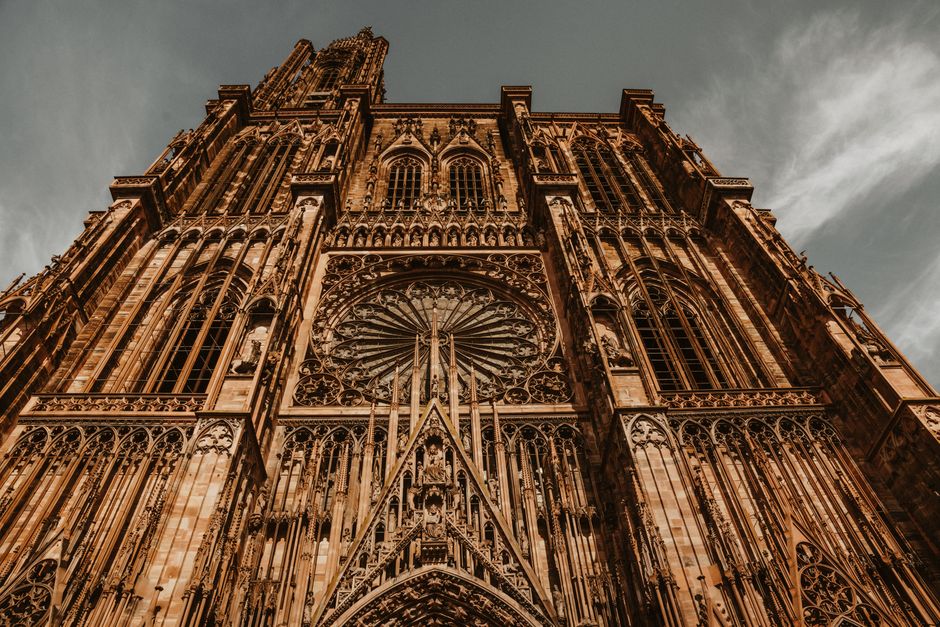
The most fundamental difference between Gothic and Baroque architecture lies in how each style approaches structure and support. Gothic architecture is characterized by a system of pointed arches, ribbed vaults, and flying buttresses. These elements allowed builders to channel the weight of the roof and walls downward and outward, reducing the need for thick, load-bearing walls. The pointed arch in particular distributed thrust more efficiently than the Romanesque round arch, enabling taller, slimmer columns and larger window openings. This structural framework gave Gothic cathedrals their characteristic verticality and sense of lightness, as if the stone structure itself were reaching upward.
Baroque architecture, in contrast, often returned to classical forms such as the Roman arch, dome, and column. Rather than eliminating mass, Baroque architects celebrated it through the use of heavy stone, large pilasters, and robust entablatures. The structural system typically relied on thick walls and solid masonry, though innovations in iron reinforcement and dome construction allowed for more ambitious spans. Baroque buildings like St. Peter’s Basilica in Rome or the Palace of Versailles exhibit a sense of solidity and groundedness. The emphasis is on sculptural plasticity: walls curve, facades project forward and recede, and columns seem to support not just weight but dramatic movement. Where Gothic structure appears to defy gravity, Baroque structure embraces and exaggerates it.
Another key structural distinction is the treatment of the plan. Gothic cathedrals often follow a cruciform layout with a long nave, transepts, and an apse, emphasizing processional movement along a central axis. Baroque churches, while sometimes maintaining a Latin cross plan, frequently adopt elliptical or oval shapes, or use complex interlocking geometries. This shift allowed Baroque architects to manipulate sightlines and create a sense of unfolding space. The structural decisions in each style were not merely technical but deeply intertwined with the spiritual and aesthetic experience the building was meant to provide.
Ornamentation: From Spiritual Symbolism to Dramatic Flourish
Ornament in Gothic architecture serves primarily a didactic and symbolic purpose. Carved stone tracery, intricate window patterns, and sculpted figures fill cathedrals with biblical narratives and moral lessons. The decoration is often rhythmic and repetitive, following the logic of the structural framework. For example, the rows of pointed arches, the diaper patterns on surfaces, and the repetitive quatrefoils create a sense of order that reflects a medieval worldview. Stained glass is perhaps the most iconic ornamental element: it filters light into a kaleidoscope of colors, transforming the interior into a space of celestial meditation. Every detail in a Gothic cathedral has a place and a meaning, contributing to an overall system of visual theology.
Baroque ornament, on the other hand, is theatrical, lavish, and often non-linear. It aims to astonish and engage the viewer through richness, complexity, and illusion. Stucco work, gilding, frescoes, and marble inlays cover ceilings, walls, and altars with swirling forms, cherubs, garlands, and dramatic scenes. The ornamentation frequently breaks out of its architectural frame, seeming to spill across surfaces and into space. One of the most striking techniques is the use of quadratura, or painted illusionistic ceilings that extend the architecture upward into a heavenly expanse. Unlike Gothic ornament, which maintains a clear distinction between structure and decoration, Baroque ornament blurs that line. The decoration becomes part of the architecture itself, creating a seamless, immersive environment.
The choice of materials also differs. Gothic ornament tends to use local stone, wood, and glass, often left in natural colors or painted sparingly. Baroque ornament exploits contrasting materials—dark marble against white stucco, polished brass against rough stone—to heighten drama. The overall effect in a Baroque building is one of abundance and motion, while in a Gothic building it is one of disciplined sublimity. Both ornamental systems aim to convey spiritual truth, but they do so through opposite visual languages: one through clarity and order, the other through emotion and exuberance.
Lighting Techniques: Transcendence vs. Theatricality
Lighting is a central component in both Gothic and Baroque architecture, yet the two styles manipulate light in fundamentally different ways. In Gothic churches, natural light is filtered through vast expanses of stained glass. The colored glass not only tells stories but also transforms sunlight into a symbolic, almost otherworldly glow. The jewel-toned light streaming through windows creates an atmosphere that changes with the weather and the time of day, inviting contemplation. The high placement of windows and the slender stone mullions allow light to wash over interior surfaces without harsh shadows, contributing to an ethereal, dematerialized effect. The goal is to evoke the divine through a transcendent, diffused illumination.
Baroque architects, by contrast, treat light as a dramatic tool. They design interiors with sharp contrasts between bright highlights and deep shadows, a technique known as chiaroscuro. Windows are often hidden, placed in cupolas or behind elaborate frames, so that the source of light is not immediately apparent. This creates a directed, spotlight-like effect that draws attention to altarpieces, statues, or frescoed ceilings. Baroque lighting is theatrical: it enhances the perception of movement and emotion, making sculptural forms appear to breathe and pulse. The interplay of light and shadow accentuates the curves and folds of decoration, adding intensity and dynamism to the space.
Artificial light also plays a role in Baroque settings, with candles and later chandeliers arranged to reinforce the dramatic composition. In Gothic interiors, artificial light was minimal and secondary, as the architecture was designed primarily for daytime use. The difference underscores a broader philosophical shift: Gothic light represents a static, eternal divine presence, while Baroque light suggests an active, unfolding revelation. Both approaches affect how visitors experience the sacred space, but they do so through contrasting sensory strategies.
Cultural and Historical Context: Religion, Science, and Society
The emergence of Gothic architecture coincided with the rise of medieval scholasticism, the growth of urban centers, and the increasing authority of the Catholic Church. Cathedrals were civic as well as religious monuments, built through the collective effort of guilds, clergy, and townspeople. The architecture reflected a worldview in which the universe was hierarchical and orderly, with God at the apex. Every architectural element—from the height of the nave to the alignment of the rose window—was infused with symbolic meaning drawn from scripture and theological commentaries. The Gothic style also benefited from advances in geometry and engineering, which allowed builders to realize increasingly ambitious designs.
Baroque architecture, on the other hand, emerged during the Counter-Reformation, a period when the Catholic Church sought to reaffirm its authority in response to Protestant criticism. The style was also shaped by the rise of absolute monarchies and the scientific revolution. Baroque buildings were conceived as persuasive instruments: they were meant to inspire awe, convince the faithful, and project power. The use of illusion, movement, and sensory richness was a deliberate strategy to engage the emotions and reinforce the Church’s message. At the same time, developments in optics, perspective, and engineering allowed architects to create sophisticated spatial effects that would have been impossible centuries earlier. The worldview of the Baroque era was less static and more dynamic, reflecting a universe in motion, subject to new discoveries and shifting political realities.
The patronage of Gothic architecture came primarily from the Church, but also from wealthy merchants and civic governments. Baroque patronage, in addition to the Church, increasingly came from royal courts and the aristocracy. This difference in patronage influenced the scale and function of buildings: Gothic works are often cathedrals, abbeys, and town halls, while Baroque works include churches, palaces, and public squares. The cultural contexts of these two periods dictated not only what was built but how it was experienced. A Gothic cathedral invites quiet reverence and contemplation; a Baroque church or palace invites active engagement and sensory delight. Both respond to the spiritual and social needs of their times, but through radically different architectural languages.
Spatial Experience: Vertical Ascent vs. Dynamic Movement
The way a visitor moves through and perceives space differs markedly between Gothic and Baroque buildings. In a Gothic cathedral, the dominant experience is one of vertical ascent. The nave rises in a series of bay divisions, each marked by clustered columns and pointed arches. The eye is drawn upward, past the triforium and clerestory, toward the ribbed vaults that seem to lift the roof. The floor plan encourages a linear movement along the central aisle toward the altar, but the overwhelming impression is one of static transcendence: the space is vast but orderly, inviting the viewer to stand and gaze upward. The structural logic is visible and comprehensible, contributing to a sense of rational spirituality.
Baroque interiors, by contrast, are designed to create a sense of movement. Curved walls, elliptical spaces, and sweeping staircases guide the visitor through a sequence of views and experiences. The space is rarely static; it unfolds as one walks, with each new angle revealing different compositions of sculpture, painting, and light. In churches like Sant’Andrea al Quirinale in Rome or the Church of the Gesù, the plan is often a central oval or a wide nave with shallow side chapels, emphasizing breadth and immediacy rather than length. The use of diagonal axes and overlapping forms creates a dynamic, almost restless environment. The Baroque spatial experience is participatory: the visitor is drawn into the drama unfolding around them, becoming part of the spectacle.
These differences in spatial organization reflect deeper aesthetic priorities. Gothic architecture privileges unity through repetition and clarity, while Baroque architecture privileges unity through integration and flow. Both achieve powerful emotional effects, but they do so by orienting the body and the gaze in opposite directions. One lifts the spirit upward; the other pulls it forward and around. Understanding these spatial strategies helps explain why Gothic churches are often described as majestic and serene, while Baroque churches are described as energetic and gripping. Neither approach is superior; each is a distinct solution to the challenge of creating meaningful architectural experience.
In conclusion, the differences between Gothic and Baroque architecture extend far beyond surface decoration. They originate in divergent approaches to structure, ornament, light, cultural context, and spatial experience. Gothic architecture seeks to transcend the material world through structural lightness, symbolic clarity, and colored light. Baroque architecture embraces the material world through dramatic mass, illusionistic decoration, and dynamic space. By examining these contrasts, one gains insight not only into the buildings themselves but also into the evolving human impulses that shaped them. Both styles offer rich lessons in how architecture can shape perception, emotion, and belief.